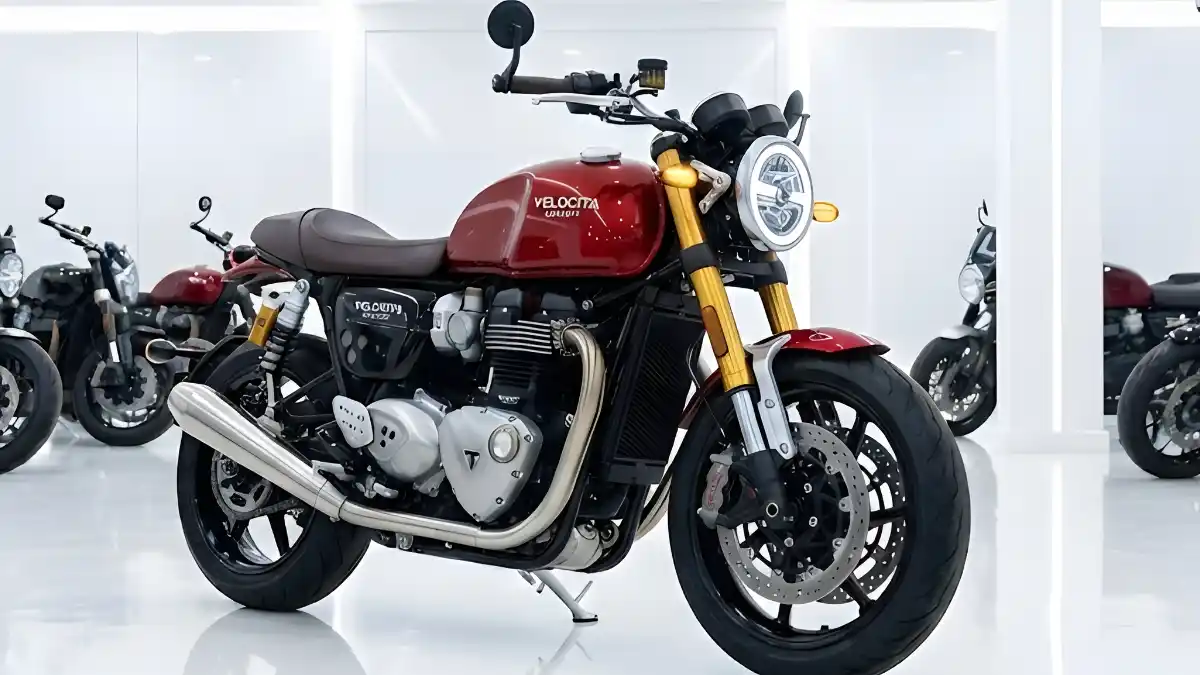
Searching for a motorcycle that blends vintage charm with modern performance? Our deep dive into the Royal Enfield Interceptor 650 explores its twin-engine heart, iconic design, and why it remains the ultimate choice for riders seeking a soulful, timeless experience on two wheels.
Mention the name “Royal Enfield” and you instantly think of heavy metal, a thumping heartbeat, and the open road. The Royal Enfield Interceptor 650 takes that legendary heritage and injects it with a smooth, parallel-twin engine that has redefined what a budget-friendly performance bike can be for modern riders.
Royal Enfield Interceptor 650: Key Features & Specs
| Feature | Details |
| Engine | 648cc Parallel-Twin, 4-Stroke, SOHC |
| Power Output | 47 HP @ 7250 RPM |
| Peak Torque | 52 Nm @ 5250 RPM |
| Transmission | 6-Speed Constant Mesh with Slipper Clutch |
| Chassis | Steel Tubular Double Cradle (Harris Performance) |
| Braking | 320mm Front / 240mm Rear Disc with Dual-Channel ABS |
| Kerb Weight | 202 kg |
A Timeless Aesthetic: Where Nostalgia Meets the Road
The design of the Royal Enfield Interceptor 650 hits you with a wave of nostalgia the moment you see it. Inspired by the iconic 1960s Interceptor series, this motorcycle is a masterclass in “less is more.” You won’t find aggressive, sharp plastic fairings or over-the-top neon graphics here. Instead, you get a beautiful teardrop-shaped fuel tank, a classic round halogen (or LED in newer trims) headlamp, and clean body lines that let the metal do the talking.
The chrome touches on the dual exhaust pipes and the engine fins provide a mirror-like finish that catches the sunlight perfectly during a Sunday morning cruise. It’s a bike that doesn’t try too hard to look fast, yet it commands attention at every traffic light through sheer class and silent confidence.
The Twin-Cylinder Heart That Defines the Ride
The real soul of the Royal Enfield Interceptor 650 is its 648cc parallel-twin engine. When it was first introduced, it marked a massive shift for the brand, moving away from the traditional single-cylinder “thump” to a more refined, vibefree experience. This engine uses a 270-degree crank, which gives it a characterful offset firing order and an exhaust note that is deep, rumbly, and incredibly addictive.
What makes this engine special is its linear power delivery. It doesn’t matter if you are a new rider or a seasoned veteran; the power is accessible. There’s plenty of low-end torque to pull you away from stops without constant gear changes, yet on the highway, it breathes freely, allowing you to cruise at 120 km/h all day without the engine feeling stressed.
Precision Handling and the Harris Performance Connection
Handling on a retro bike can sometimes feel “vague,” but the chassis of the Royal Enfield Interceptor 650 was developed in collaboration with Harris Performance in the UK. This partnership ensured that the bike isn’t just a straight-line cruiser. It actually loves corners.
The double-cradle frame provides excellent rigidity, making the bike feel predictable and planted when you lean it into a bend. The suspension setup is slightly on the firmer side, which helps with high-speed stability. Whether you are navigating tight city alleys or carving through mountain twisties, the bike feels balanced. While it’s not a lightweight sportbike, its center of gravity is well-managed, making the 202-kg weight disappear once you are in motion.
Minimalism at Its Best: Features and Cockpit
In an era where motorcycles are becoming “computers on wheels,” the Royal Enfield Interceptor 650 is a breath of fresh air. The cockpit is delightfully simple. You get a twin-pod analog instrument cluster with a small digital display for the fuel gauge and trip meters.
There are no complex riding modes, no traction control menus to scroll through, and no distracting large TFT screens. This is intentional. It’s a motorcycle designed for people who want to focus on the scenery and the mechanical connection between the throttle and the rear wheel. The inclusion of a slipper clutch and dual-channel ABS ensures that while the look is old-school, the safety and ease of use are strictly 2026-standard.
Real-World Usability and Comfort
Is it a daily driver? Absolutely. The upright riding triangle, mid-set footpegs, and wide handlebars make the Royal Enfield Interceptor 650 one of the most comfortable roadsters in its class. You sit “in” the bike rather than “on” it, giving you a great sense of control.
While the stock seat has been a point of debate for long-distance touring, the massive aftermarket support means you can easily customize it to your liking. Fuel efficiency is also surprisingly decent for a 650cc twin, often hovering around 25-30 km/l depending on your right wrist’s enthusiasm. It’s a bike that is just as happy fetching groceries as it is crossing state lines.
Conclusion: Why It Still Wins in 2026
Even as newer, more tech-heavy competitors enter the market, riding the Royal Enfield Interceptor 650 remains a unique experience. It’s a motorcycle that connects with your emotions rather than just your logical brain. It reminds us that motorcycling is about the wind in your face, the sound of the pipes, and the simple joy of the journey.
If you want a machine that offers classic looks, a world-class twin-cylinder engine, and the reliability of modern engineering without a six-figure price tag, the Royal Enfield Interceptor 650 is still the undisputed king of its segment.
Frequently Asked Questions (FAQs)
1. Is the Royal Enfield Interceptor 650 good for beginners?
Yes, thanks to its smooth power delivery and manageable seat height, many beginners find it very approachable. However, its 202kg weight requires some respect during low-speed maneuvers.
2. What is the top speed of the Interceptor 650?
The bike can comfortably hit a top speed of around 160-170 km/h, though it is most enjoyable when cruising between 100-120 km/h.
3. Does the Interceptor 650 vibrate at high speeds?
Unlike the older single-cylinder models, the parallel-twin engine is incredibly smooth. You might feel very slight buzzing at the very top of the rev range, but for 95% of your riding, it is vibration-free.
4. How is the maintenance cost for this bike?
Royal Enfield has a vast service network, and the Interceptor is relatively simple to work on. Parts are generally affordable, making it one of the most cost-effective twin-cylinder bikes to maintain.
5. Can I use the Interceptor 650 for long-distance touring?
Definitely. With a few basic mods like a touring seat and a small flyscreen to deflect wind, the Interceptor is a fantastic long-distance companion.