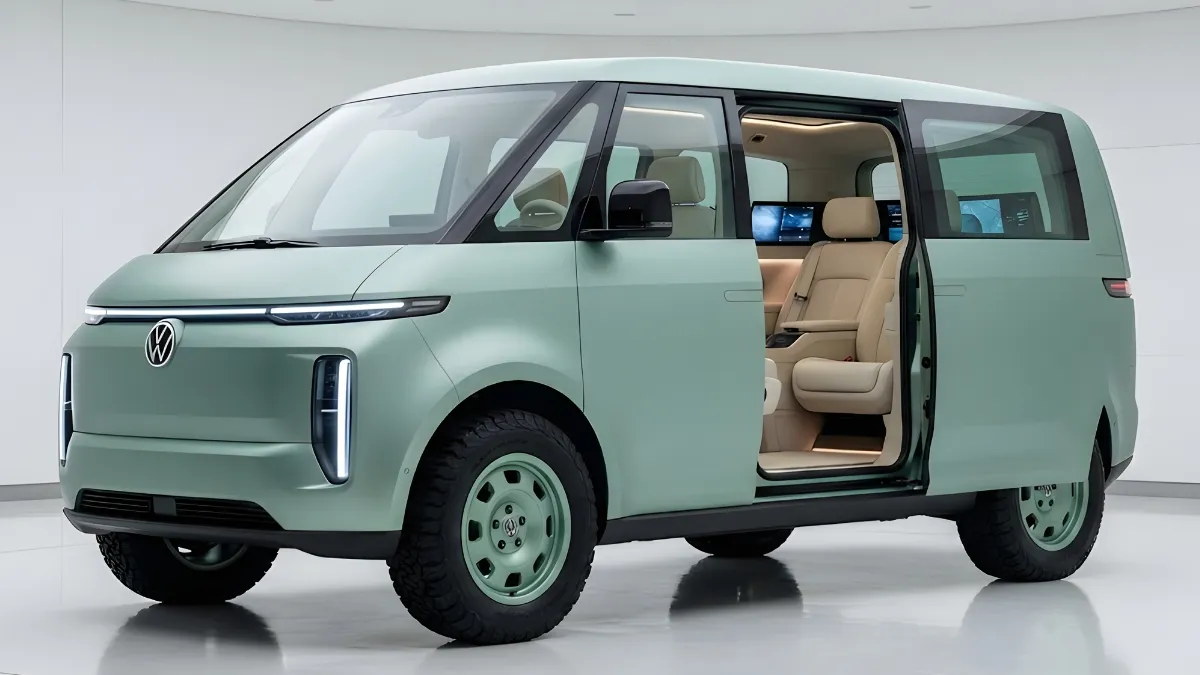
If you’ve been dreaming of the “van life” but found the price tags of traditional motorhomes a bit terrifying, the Kia Camper is about to be your new best friend. Revealed as a key part of Kia’s 2026 PBV (Platform Beyond Vehicle) lineup, this isn’t just a van—it’s a modular “escape pod” designed to make high-tech adventure accessible to everyone.
Kia Camper 2026: At a Glance
| Feature | Details |
| Model Platform | Kia PV5 (Modular EV Platform) |
| Electric Range | Up to 412 km (WLTP) |
| Charging Speed | 10% to 80% in just 30 minutes |
| Key Accessory | “Sleep Pack” with pop-up roof and external kitchen |
| Power Output | 120 kW (161 hp) motor |
| Starting Price | Estimated from £32,995 / $35,000 (Base) |
A Fresh Take on Adventure Design
The Kia Camper 2026 (based on the futuristic PV5 WKNDR concept) looks like it drove straight out of a sci-fi movie and landed in a national park. Its boxy “Tiger Face” design isn’t just for show; it’s built for maximum interior volume. For 2026, Kia has added rugged touches like raised suspension, oversized all-terrain tires, and modular body panels that can be easily swapped if you scuff them on a narrow trail.
One of the coolest features is the “Gear Head” external storage. It’s a side-mounted pod that flips out to become a fully functional camp kitchen, saving precious space inside the cabin. Whether you’re parked by a beach or deep in the mountains, the Kia Camper provides a sleek, modern silhouette that makes old-fashioned RVs look ancient.
Interior Luxury Without the Luxury Price
Inside, the Kia Camper feels like a high-end studio apartment. Kia used a “flat floor” architecture to ensure you have plenty of room to move around. The passenger seat can actually be inverted to face the rear, creating a small dining or workspace with the central sliding tray.
For sleeping, the rear benches fold completely flat to accommodate two adults comfortably. If you need more room, the pop-up camper roof adds another sleeping tier, making it a viable option for small families. Every inch is utilized, with under-floor storage compartments and wall-mounted fold-out benches that keep the floor clear for gear during the day.
High-Tech Innovation for Off-Grid Living
Technology is where the Kia Camper truly pulls ahead of its rivals. The dashboard features a massive 12.9-inch infotainment screen running Android Automotive OS, which means you get native Google Maps and Spotify. But the real “magic” for campers is the Vehicle-to-Load (V2L) technology.
With V2L, your Kia Camper acts as a giant power bank. You can plug in your laptop, induction cooktop, or even an espresso machine directly into the van’s outlets. If you’re going deep off-grid, some models even support solar panel integration on the roof to trickle-charge the battery while you hike.
Performance, Range, and Charging
Under the hood—or rather, under the floor—the Kia Camper is powered by a 71.2 kWh battery pack. While the official WLTP range is around 412 km, real-world tests have shown that Kia’s energy management is incredibly efficient. Even when fully loaded with camping gear, the Kia Camper is designed to handle long highway stretches without constant “range anxiety.”
When you do need to stop, the 150kW DC fast-charging capability means you can go from 10% to 80% battery in about 30 minutes—just enough time for a quick lunch break. This efficiency makes the Kia Camper far more practical for cross-country travel than older, heavier electric vans.
Safety and Peace of Mind on the Road
Kia hasn’t skimped on safety for its adventure seekers. The Kia Camper comes standard with a full suite of ADAS (Advanced Driver Assistance Systems). This includes Highway Driving Assist, which helps center the van in its lane and manage speed based on traffic, and a 360-degree camera system that makes parking in tight campsites a breeze.
Because the Kia Camper is built on a dedicated EV platform, it has a lower center of gravity than traditional tall vans, making it feel much more stable and “car-like” during windy highway drives. It’s a vehicle that inspires confidence, whether you’re a seasoned van-lifer or a first-time explorer.
Conclusion
The Kia Camper 2026 is a bold step toward making the great outdoors more accessible and sustainable. By combining a clever modular design with the low running costs of an electric powertrain, Kia has created a vehicle that works just as well as a daily driver as it does as a weekend escape pod. If you want a stylish, tech-heavy, and affordable way to explore the world, the Kia Camper is undoubtedly the one to watch this year.
Frequently Asked Questions (FAQs)
1. How many people can sleep in the Kia Camper?
The standard layout comfortably sleeps two adults on the fold-flat rear benches. With the optional pop-up roof tent, the Kia Camper can accommodate up to four people.
2. What is the real-world range of the Kia Camper?
While the official WLTP range is 412 km, expect a real-world range of around 300-350 km when fully loaded with gear and traveling at highway speeds.
3. Can I use the Kia Camper for my daily commute?
Yes! One of its biggest strengths is its compact footprint. The Kia Camper is roughly the size of a standard SUV, making it easy to park in city garages and navigate through urban traffic.
4. How much does the Kia Camper cost?
Pricing is expected to start around $35,000 (£32,995) for the base passenger model, with camper conversion kits and high-spec trims likely pushing the price toward $45,000 – $50,000.
5. Is the camper kit removable?
Yes, the Kia Camper is part of the “Platform Beyond Vehicle” strategy, meaning the interior modules are designed to be flexible. You can swap out seats or storage units to suit your needs.